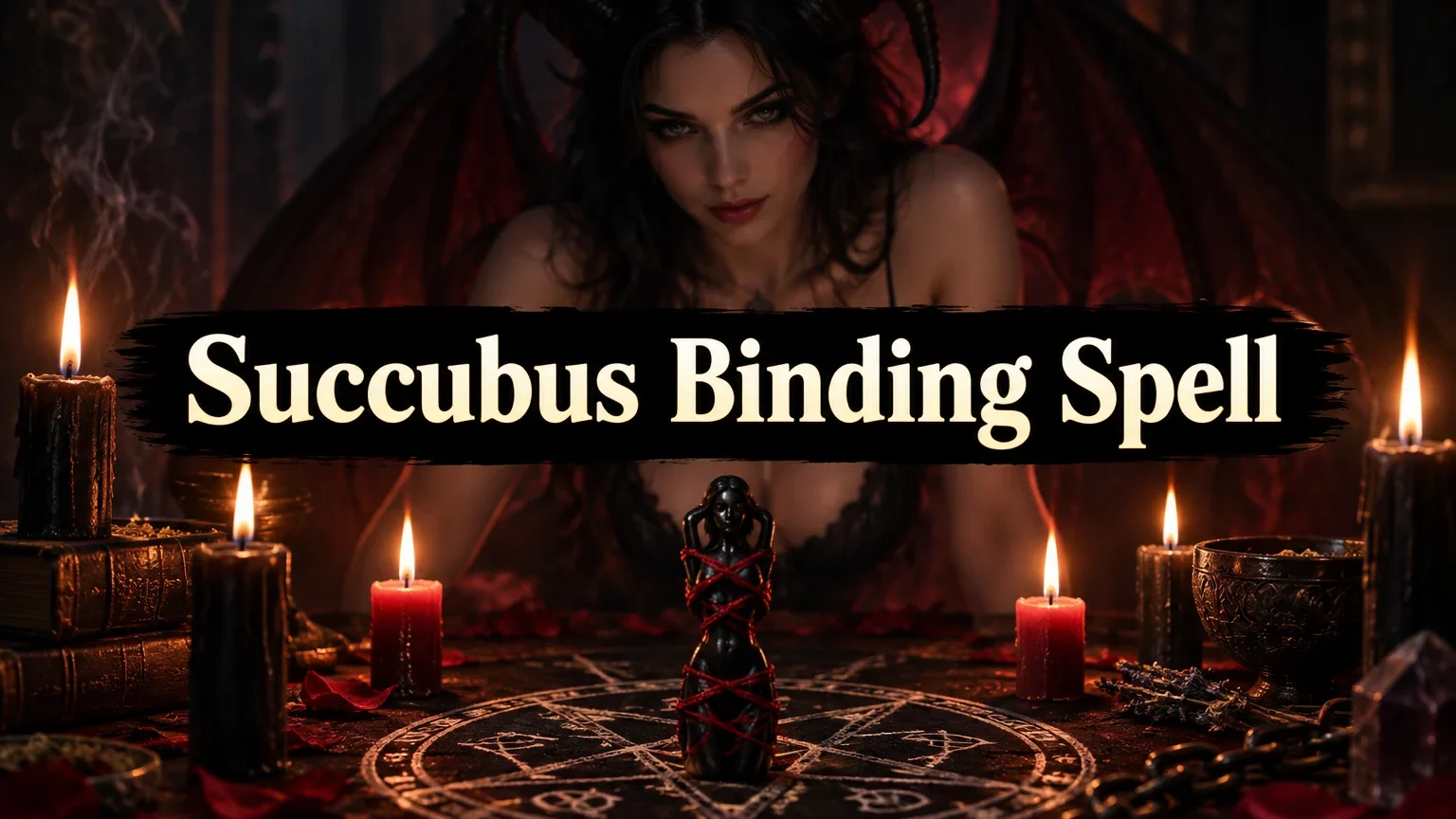

A succubus binding spell is generally understood as a ritual intended to create a sustained connection with a succubus-type spirit rather than a one-time summoning. In practice, the goal is usually ongoing nocturnal contact, dream encounters, erotic energetic exchange, and a more stable spirit relationship anchored to the practitioner, a vessel, or a defined ritual pact.
What matters first is this: in occult practice, binding does not automatically mean domination, guaranteed sexual access, or a spirit appearing on command every night. A serious working is usually structured around resonance, permission within the ritual framework, and a clear energetic link. If someone describes it as a simple switch that forces constant physical encounters, that is usually a sign of fantasy, exaggeration, or sloppy ritual language.
Most practitioners who work in this area treat the ritual as a form of spirit attachment or companion binding focused on sensual contact, dream-space interaction, and repeated energetic presence. If you are new to the broader idea of binding, it may help to read a general explanation of how an entity binding spell is typically understood before focusing on the succubus-specific version.
How this kind of working is usually approached
A succubus binding ritual is more specific than a generic attraction spell and more structured than a simple invocation. The intention is not just to call a spirit once, but to establish a repeatable channel through which contact can occur during sleep, trance, meditation, arousal, or altered states. That ongoing channel is the heart of the work.
Practitioners often build the ritual around four elements: the spirit link, the anchor, the terms, and the feeding pattern. The spirit link is the invitation or identification of the presence being called. The anchor is what stabilizes the connection, which may be the practitioner’s energy body, a dedicated talisman, a sigil, or a consecrated object. The terms define the scope of contact, boundaries, and the purpose of the relationship. The feeding pattern refers to how the bond is sustained through attention, offerings, dream work, sexual energy, devotional focus, or repeated ritual contact.
Timing often matters more here than it would in a simple petition spell. Many practitioners prefer late-night hours, the period before sleep, the dark moon, or nights when the practitioner is already psychically open and sexually charged. That is not because the clock itself creates the result, but because this type of work depends heavily on altered awareness, receptivity, and symbolic alignment with night contact.
Objects used in the ritual also tend to be chosen for sensual, lunar, infernal, or dream-related associations. A black or red candle, perfume or incense, a charged sigil, silk or a dedicated cloth, and a vessel such as a ring or pendant are common choices. In ritual logic, these are not decorative. They give the working a sensory language and help the mind and subtle body recognize the same current again and again.
Some workings are aimed at attracting a compatible succubus presence in general. Others are framed as binding an already-contacted spirit more closely. That distinction matters. Calling an unknown presence and deepening a known connection are not the same operation, and they should not be treated as interchangeable.
If your interest is less about binding and more about initial contact, a separate succubus summoning approach may be the more relevant comparison.
What affects the working
The biggest factor is clarity of intent. “I want a succubus” is vague. “I want stable dream contact with a sensual spirit presence that aligns with my energy, respects stated boundaries, and deepens over time” is far more usable in ritual terms. Spirits, symbols, and trance states respond better to defined patterns than to scattered desire.
Your psychic sensitivity matters too, though not in the dramatic way people sometimes assume. Some people notice subtle touch, shifts in pressure, dream imagery, scent, or a distinct emotional atmosphere. Others receive contact mainly through sleep paralysis states, lucid dreaming, or recurring symbolic dreams. A working can be active without producing theatrical manifestations.
Emotional condition also shapes results. Obsession, fear, porn-fed fantasy, and constant testing can distort perception. On the other hand, disciplined desire, decent sleep, grounded energy work, and consistent ritual focus tend to give the bond something stable to build on. This type of ritual usually works poorly when treated as a nightly dare.
Boundaries are not optional. In a careful working, the practitioner defines when contact is welcome, how intensity should be moderated, and what is off-limits. That does not make the ritual less effective. It usually makes it cleaner. Without boundaries, people often confuse energetic overwhelm, insomnia, or parasitic drain with success.
The method of binding also changes the feel of the result. A vessel-based bond may feel easier to pause, feed, or contain. A direct energetic binding can feel more intimate but also more invasive if the practitioner is not prepared. A companion-style framework is often better for readers who want recurring presence rather than aggressive intensity. For that distinction, this overview of a companion spirit binding approach is useful context.
What to expect
Realistic expectations are usually quieter than fantasy suggests. The first signs, if the working takes hold, are often changes in dream texture, heightened erotic dream recall, a sense of presence before sleep, recurring symbols, pressure on the bed, sudden warmth, or a distinct intimate atmosphere during trance. Some people report a feeling of being watched in a way that is not threatening but charged. Others mainly notice a strong pull toward certain hours, sigils, or ritual states.
You should not assume that every vivid dream or every bodily sensation is proof of a successful binding. Suggestibility is real, especially with a subject that already carries heavy imagery. Good discernment is part of the practice. Keep notes, look for repeated patterns, and pay attention to whether contact develops coherence over time rather than chasing a single dramatic night.
Results vary widely. Some workings stay in the dream and astral range. Some remain mostly energetic and devotional. Some simply do not take in a stable way because the ritual framework, the target spirit current, or the practitioner’s condition was not compatible. A competent practitioner will leave room for variation instead of promising nightly visitation on a fixed schedule.
It is also worth saying plainly that a succubus binding spell is not a substitute for human intimacy, mental stability, or basic energetic hygiene. The ritual may be sought for sensual exploration, spirit companionship, shadow work, or nocturnal contact, but it should still be approached with a clear head.
Common questions
Is a succubus binding spell the same as summoning?
No. Summoning is usually about contact or appearance in a ritual setting. Binding is about creating continuity. A summoning may lead to one strong experience and then fade. A binding attempts to establish an ongoing link that can be revisited and reinforced over time.
Does binding mean the spirit is forced to obey?
Not necessarily, and serious practitioners should be careful with that language. In many ritual frameworks, binding means constraining the form of contact, attaching the connection to an anchor, or formalizing a relationship. It does not automatically mean total control. Claims of absolute obedience usually tell you more about the seller’s style than about the quality of the spirit work.
Can this create physical sexual encounters?
Most descriptions of this practice refer to energetic, dream-state, trance-state, or subtle-body experiences, not ordinary physical intercourse in the literal sense. People may experience touch, pressure, arousal, or vividly embodied dream contact, but promising concrete physical manifestations as a certainty is not realistic.
How do you tell the difference between contact and imagination?
Look for consistency, not intensity. Repeated symbols, the same presence signature, similar dream settings, contact that responds to ritual timing, and effects that continue over several sessions are more meaningful than one dramatic experience. A journal helps. So does a willingness to reject what does not hold up on review.
Can this kind of binding become overwhelming?
Yes, especially if the ritual is opened carelessly, fed too aggressively, or done by someone who wants intensity more than stability. Sleep disruption, fixation, energetic fatigue, and difficulty closing the ritual state are all reasons boundaries and containment matter. A good framework includes not just opening the connection, but managing it.
Before choosing a personalized working
A personalized working makes more sense when your aim is specific: a known succubus presence, a vessel-based bond, dream-focused contact rather than general sensual energy, strong boundaries around timing and intensity, or a history of unstable spirit contact. Those details change the ritual design. They also affect whether binding is even the right method, or whether invocation, companion work, or a slower attunement would serve you better.
If you’re considering professional help, the useful question is not “Who promises the most.” It’s whether the practitioner can explain the structure of the bond, the role of the anchor, the expected mode of contact, and the limits of the work without hiding behind vague drama. In a subject like this, precision is usually a better sign than spectacle.
Website: xypherawitch.com
Contact Form:
Here you can contact me for any spell you desire, psychic reading, dream interpretation, or any type of custom spell.
Please double-check your e-mail before sending your message to ensure I can respond accurately.